...
0
0.0

every nut butter powder ranked

data
comparison

5 powders
tested

6 min
read

we ranked peanut, almond, pistachio, cashew, and sesame powder across protein, minerals, and real value. the winner depends on your goal.

every nut has a different nutritional profile. most brands sell one, maybe two powders. we make all five. so we did what nobody else can: a head-to-head comparison of every nut butter powder type available in the world — protein, minerals, calories, and cost per serving.

Every Nut Butter Powder, Ranked

5 powders, 5 winners: key takeaways

sesame (halva) powder has 975mg calcium per 100g — 8x more than milk (USDA FoodData Central)

peanut powder leads on protein: 50g per 100g at the lowest cost per serving of any nut powder

pistachio is uniquely rich in methionine — the amino acid most plant proteins lack

almond powder is the vitamin E champion: 25mg/100g, one of the highest natural concentrations in any food

cashew powder is the chef's choice — the smoothest texture for sauces, curries, and baking

the complete nutrition ranking

there are five types of nut butter powder in the world. peanut and almond are well-known. but pistachio, cashew, and sesame (halva) powder? those are categories most people don’t even know exist. we put all five side by side and measured what actually matters: protein density, mineral content, amino acid profiles, calorie efficiency, and real-world value.

the data comes from USDA FoodData Central (defatted nut flour entries) and our own lab analysis of Botenz products. every number below is traceable to a published source.

5
powders compared head-to-head
975mg
calcium in sesame (8x milk)
50g
protein per 100g (peanut)

the data tells a clear story: there is no single best powder. each one dominates a different category. your goals determine your winner. here’s how they stack up — and why it matters.

protein & calorie density

peanut powder leads on raw protein: 50g per 100g at just 370 kcal. that’s the best protein-to-calorie ratio of any nut powder — and roughly double the concentration of traditional peanut butter (25g/100g), because the defatting process removes oil and concentrates everything else.

sesame delivers 40g protein per 100g (USDA FDC #170153) with a unique advantage: it’s exceptionally rich in methionine (900mg/100g), the sulfur amino acid that most plant proteins — pea, soy, and legumes — are deficient in. combined with a legume protein, sesame creates a complete amino acid profile that rivals whey.

protein per 100g (grams) Peanut 50g Almond 50g Pistachio 45g Sesame (Halva) 40g Cashew 38g USDA FoodData Central + Botenz lab analysis botenz.in

the mineral comparison nobody has done

this is where it gets remarkable. sesame powder contains 975mg of calcium per 100g (USDA) — that’s 8 times more than whole milk (120mg/100g) and more than parmesan cheese (864mg/100g). calcium absorption from sesame is 28-32%, comparable to dairy’s 27-30% (UCSF Health calcium database).

for iron, sesame leads at 14.6mg/100g — more than beef liver (6.5mg). almond dominates vitamin E at 25mg/100g, one of the highest natural concentrations of any food. pistachio is uniquely rich in vitamin B6, potassium, and lutein — the carotenoid linked to reduced risk of age-related macular degeneration.

calcium per 100g (mg) Sesame (Halva) 975mg Almond 340mg Pistachio 107mg Peanut 92mg Cashew 37mg USDA FoodData Central (defatted values) botenz.in

the bottom line: if you only use one powder, peanut is the safe bet — highest protein, lowest price. but if you match the powder to your specific goal, the results are dramatically better:

  • bone health: sesame (975mg calcium)
  • skin & immunity: almond (25mg vitamin E)
  • muscle building: peanut (50g protein, best value)
  • cooking versatility: cashew (smoothest texture)
  • complete nutrition: pistachio (best amino acid profile)

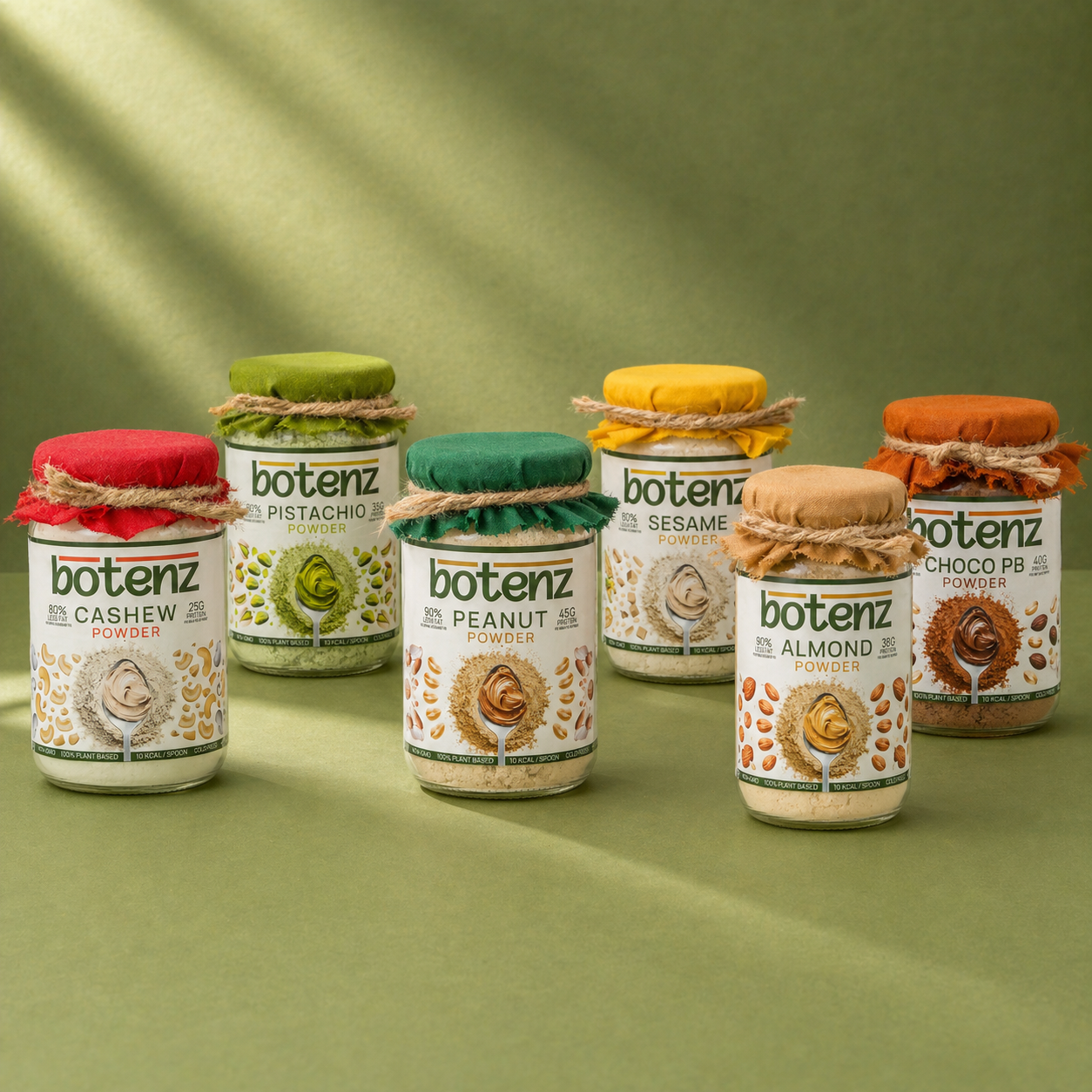
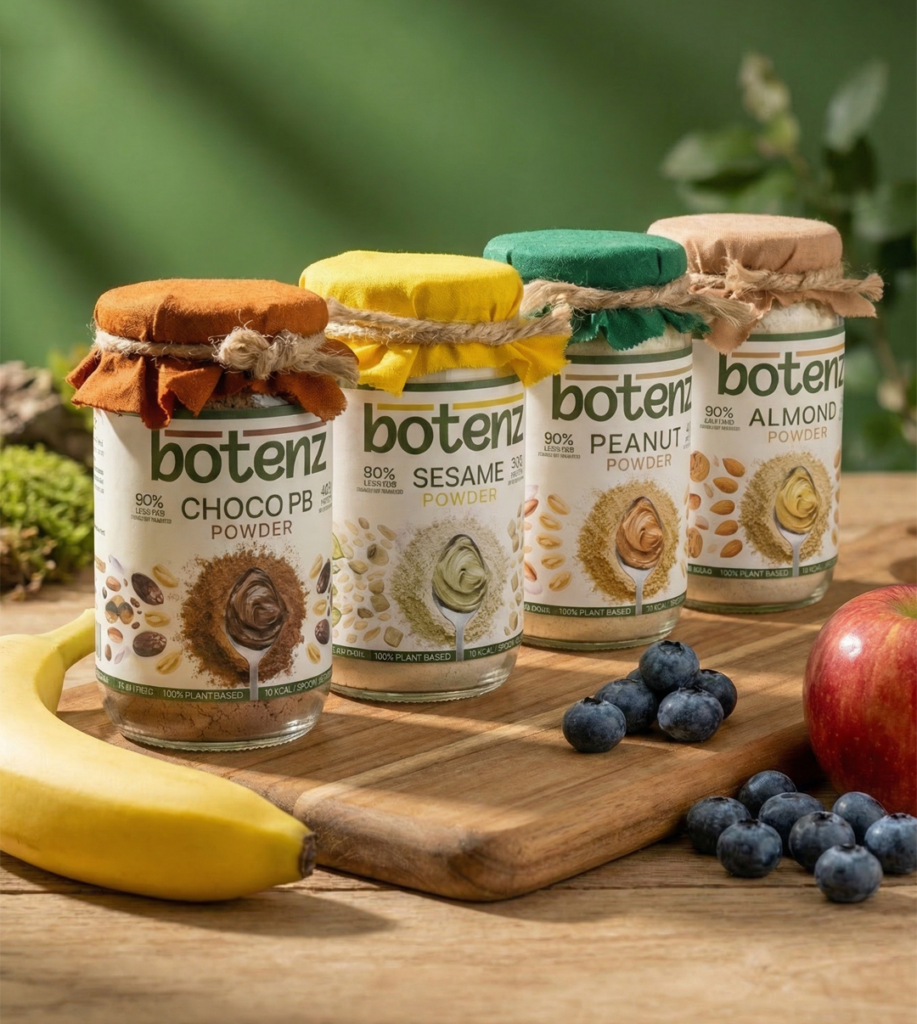
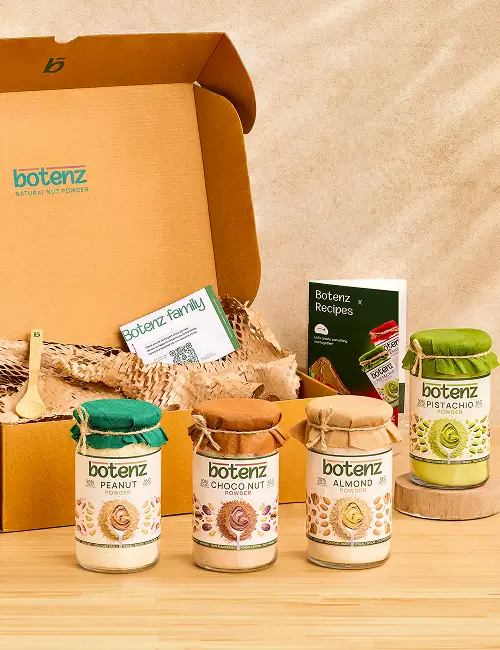
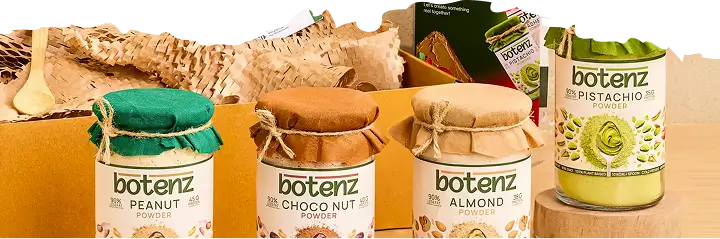
Botenz is the only brand in the world offering all five in one lineup. that’s not a marketing claim — there is literally no other company that produces peanut, almond, pistachio, sesame, and cashew butter powders. see the full range.

full nutrition comparison (per 100g powder)
Peanut
Calories370 kcal
Protein50g
Total Fat8g
Fiber10g
Calcium92mg
Iron5.6mg
Vitamin E4.9mg
Best Forprotein value
Almond
Calories370 kcal
Protein50g
Total Fat8g
Fiber10g
Calcium340mg
Iron5.3mg
Vitamin E25mg
Best Forskin & bones
Pistachio
Calories400 kcal
Protein45g
Total Fat12g
Fiber8g
Calcium107mg
Iron4.2mg
Vitamin E2.9mg
Best Foramino acids & B6
Sesame (Halva)
Calories382 kcal
Protein40g
Total Fat12g
Fiber12g
Calcium975mg
Iron14.6mg
Vitamin E0.3mg
Best Forcalcium & iron
Cashew
Calories380 kcal
Protein38g
Total Fat10g
Fiber6g
Calcium37mg
Iron6.7mg
Vitamin E0.9mg
Best Forcooking sauces
USDA FoodData Central + Botenz lab analysis (defatted powders)

clinical evidence: sesame's anti-inflammatory power

beyond basic nutrition, sesame has clinical evidence backing its health claims. a 2019 randomized, triple-blind, placebo-controlled trial with 44 rheumatoid arthritis patients found that 200mg/day of sesamin (a sesame lignan) for 6 weeks produced significant reductions in CRP, TNF-alpha, and COX-2 — key inflammatory markers (PubMed 31309643).

sesame lignans (sesamin, sesamol, sesamolin) inhibit the NF-kB inflammatory pathway and have documented hepatoprotective effects. this is not theoretical — it’s peer-reviewed clinical data. no other nut butter powder has this level of published evidence behind it (PMC comprehensive review).


nut butter powder vs traditional nut butter
pros
85% less fat with the same flavor and nutrient profile
2x protein concentration per 100g (defatting doubles density)
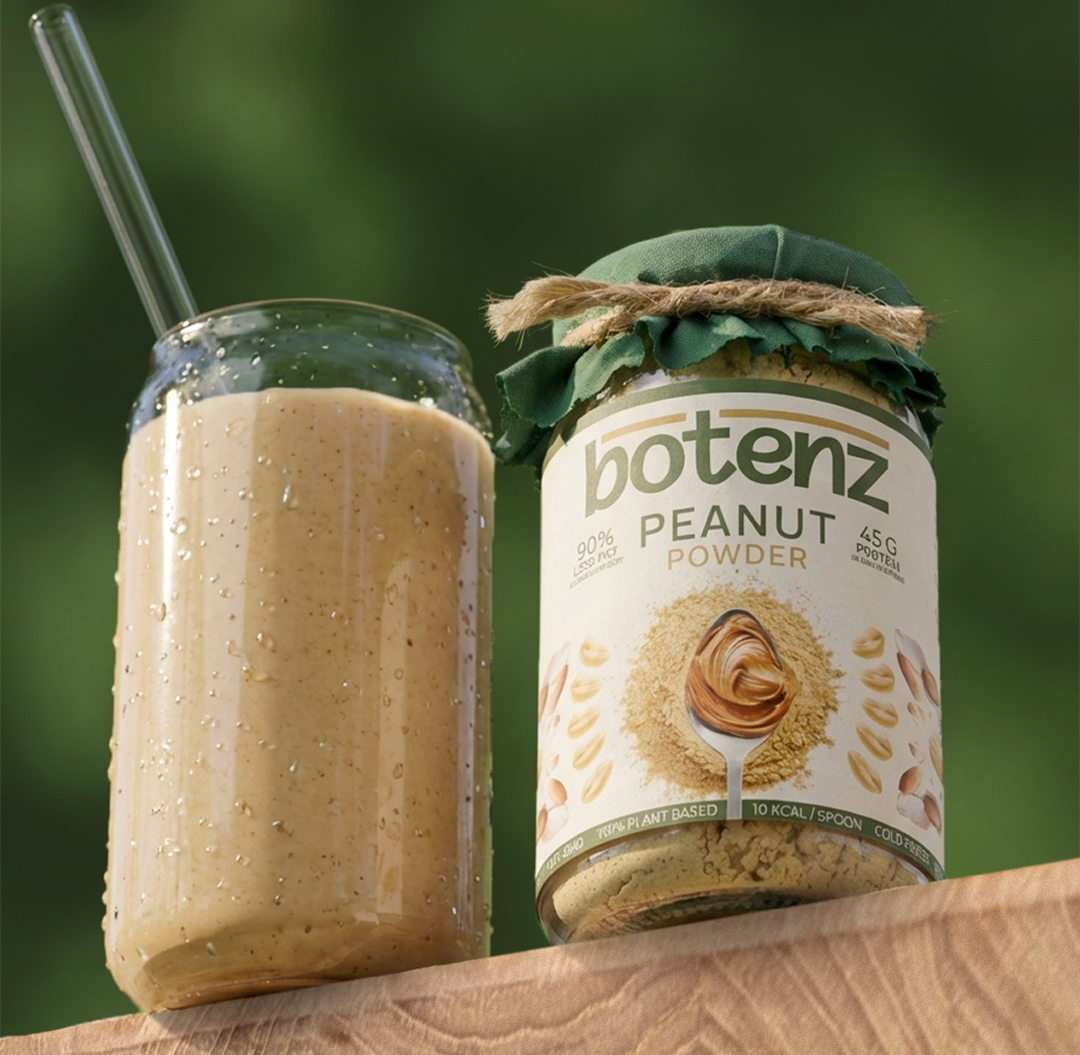
blends instantly into smoothies, oatmeal, baking, sauces
90% less packaging waste than jarred nut butter
full mineral retention: calcium, iron, vitamin E all preserved
Botenz offers all 5 types (the only brand globally with the full range)
cons
not a spread — won't replace nut butter on toast
higher price per gram than mass-market peanut butter
less widely available than traditional brands (online only)
frequently asked questions
which nut butter powder has the most protein?
peanut butter powder and almond butter powder are tied at approximately 50g of protein per 100g. this is roughly double the protein concentration of traditional nut butters, because the defatting process removes oil and concentrates protein.
is sesame powder really higher in calcium than milk?
yes. defatted sesame powder contains approximately 975mg of calcium per 100g (USDA FoodData Central). whole milk contains about 120mg per 100g. calcium bioavailability from sesame is 28-32%, comparable to dairy's 27-30%.
what is halva powder used for?
halva powder is defatted sesame butter powder. it works in smoothies, Middle Eastern desserts, protein balls, dressings, and baking. it adds a nutty sesame flavor with extremely high calcium (975mg/100g) and iron (14.6mg/100g). Botenz is one of the only brands producing halva powder globally.
does pistachio butter powder exist?
yes, but it is extremely rare. Botenz is one of the only brands in the world producing pistachio butter powder. it delivers 45g protein per 100g with a uniquely complete amino acid profile and high levels of vitamin B6, potassium, and lutein.
which nut butter powder is best for weight loss?
for pure calorie efficiency, peanut powder offers the most protein per calorie (50g protein at 370 kcal per 100g). all five powders are significantly better for weight management than traditional nut butters, which contain 50-56g of fat per 100g.

why we made all five

“every nut has something the others don’t. sesame has calcium that rivals dairy. pistachio has an amino acid profile most plant proteins can only dream of. we didn’t make five powders to fill a shelf — we made them because the nutrition data demanded it.”

(Elad Lavi — founder, Botenz)

Why choose Botenz?

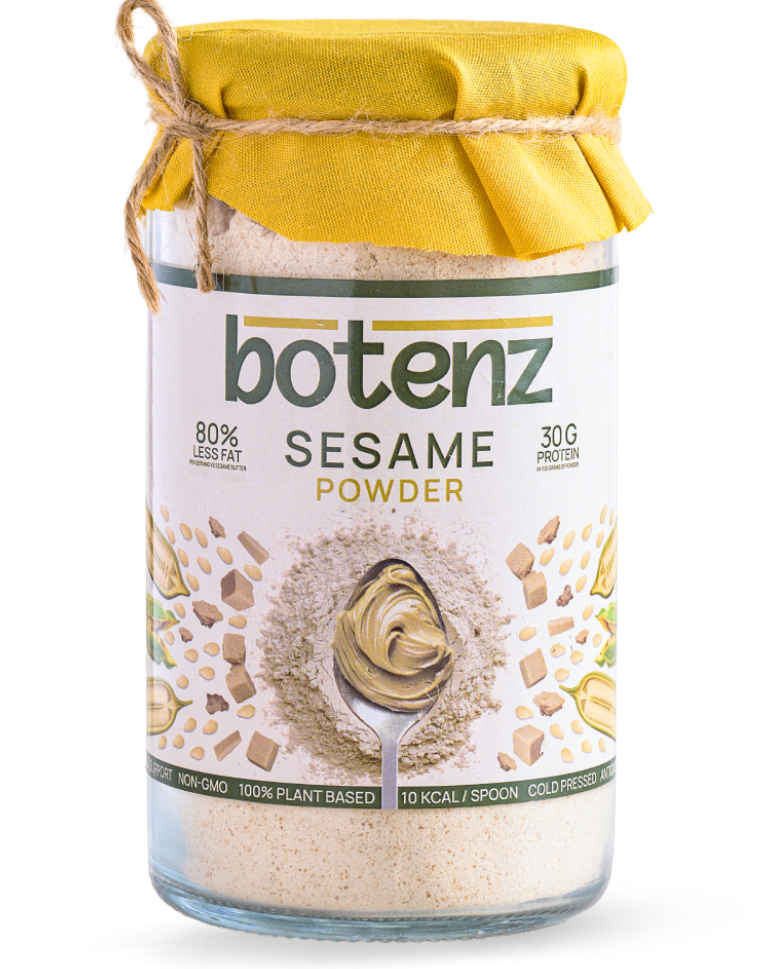
sesame butter powder in India – product pouch front
42
calories
100
calories
5g
protein
4g
protein
1.5g
fat
9g
fat

Per Serving

Per Serving

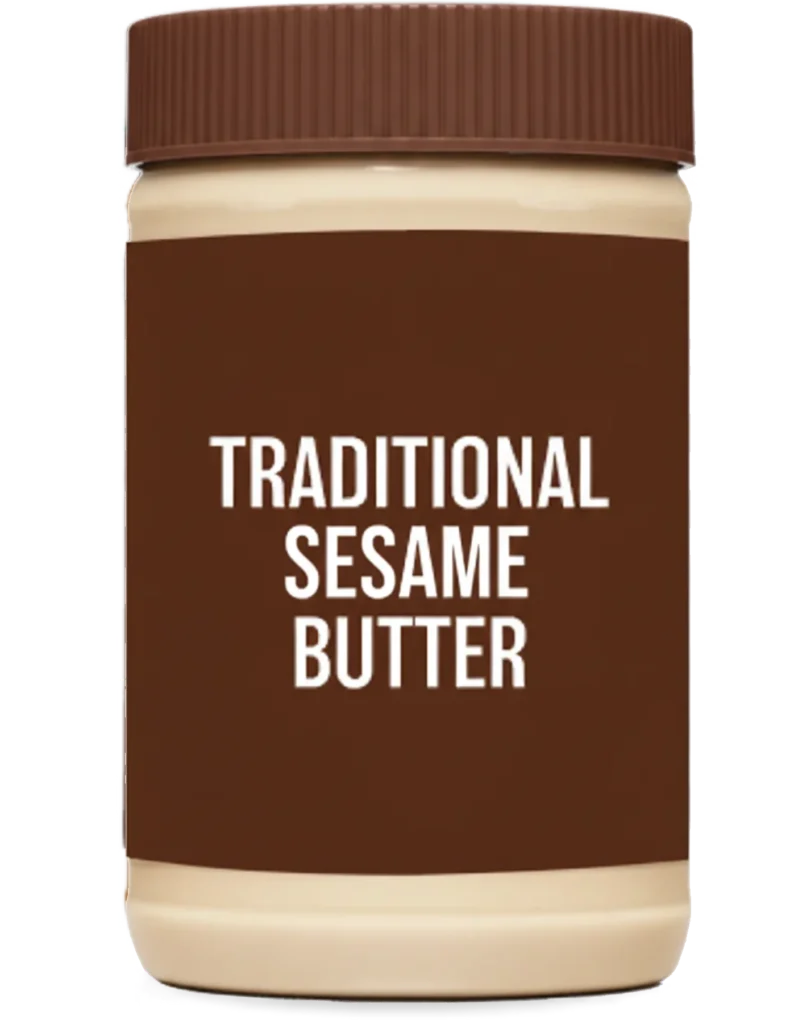
traditional most regular Sesame butter picture
48
calories
4g
protein
1.5g
fat

Per Serving

48
calories
4g
protein
1.5g
fat

Per Serving

Botenz is the only brand in the world offering peanut, almond, pistachio, halva (sesame), and cashew butter powders in a single lineup. every powder is single-ingredient — mechanically pressed nuts or seeds, no additives, no sugar, no fillers. 85% less fat than traditional nut butter, with double the protein concentration per calorie. explore all powders.

Elad Lavi
written by
elad lavi
founder, Botenz - building the world's most complete nut butter powder brand
icons 1

more like this
nut butter science

icons 2

25g

protein

30

minutes

400

kcal

25g

protein

30

minutes

400

kcal

25g

protein

30

minutes

400

kcal

25g

protein

30

minutes

400

kcal

Unlock 15% Off

⏱︎ 1 min

Complete for 15% Off

From Me to India

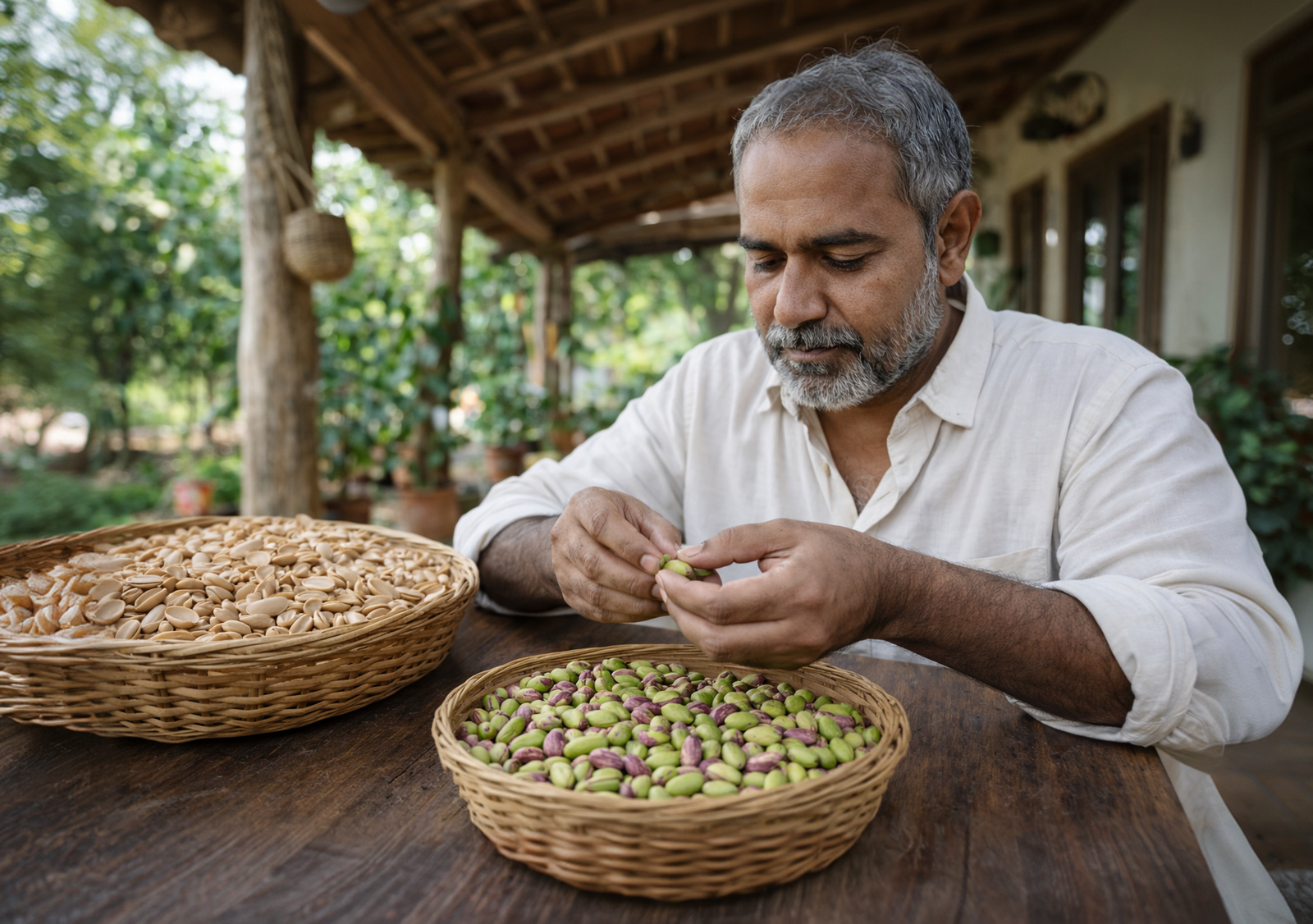
I’m Elad Lavi, the founder of Botenz. After living in India, I realized something: people here care about health—but “better-for-you” products here often use the same tricks—just better marketing.

IMG-20250522-WA0042

So I built Botenz for European standards, kept it clean and simple, and focused on nuts—because India already values them as premium nutrition, and we make them even better: more of the good stuff, with much less oil.

Botenz is my mission—to make better nutrition feel normal.
— Elad Lavi, Founder

beautiful about us and info botenz jar

Clean Nutrition, No Tricks.

Others chase flavor with additives. We keep it real.

We pack Botenz in glass, not plastic, to keep the powder pure—no microplastics, better freshness, and real natural taste. Inside, it’s just 1–3 natural ingredients with no refined sugar, no fillers, and no gums. We use the most natural process.

Botenz exists to make better nutrition feel normal in India—clean, premium, and easy to trust. Start with one jar and taste the difference: real nuts, less oil, zero tricks.

Great! Enjoy Another

20% off!

IMG_20260115_064309_370
Botenz peanut powders logo

Claim This

Limited Discount

Peanut KV (2)
0